Archives

The body’s immune system is one of the robust defense mechanisms. Now, scientists are exploring to use our immune system to fight some of the deadliest diseases including cancer by understanding how immunotherapy works and how drugs that are based on immunotherapy help our body fight cancers. In a recent study, researchers are working on understanding how Yervoy, a common immunotherapy drug against cancer, works in fighting against the disease. They are also looking at manufacturing similar cost-effective drugs that promise to bring down the cost of cancer drugs.

Rare-earth elements, despite their names are quite common on the earth’s crust, but are often difficult to find, as they tend to clump together to form minerals. They are a group of seventeen elements including Scandium, Cerium and Neodymium, which share chemical properties.

Social Capital is the various networks a person can form throughout his life time, with his relatives, friends, co-workers etc, which could become economically valuable.

Have you ever wondered what billions of years of evolution has left us with? Incredible answers to some of the toughest questions, say scientists. In fact, it has given rise to a new field called biomimicry that aims to provide some of the incredible solutions to design problems inspired by nature. Think of the aeroplanes, super fast bullet trains, artificial glues for bones, climate controlled buildings -- all these are a result of us looking close into nature’s way of dealing with problems and drawing an inspiration from them. But there are more such examples that are gamechangers. Read more to know how biomimicry is all set to influence our lives more than ever.

Foot and Mouth Disease is a highly infectious viral disease affecting hoofed animals like cattle, deer, sheep and goats. The disease is often fatal, mostly affecting  domesticated animals and causing huge losses to their owners. The contagious nature of the virus quickly destroys  entire herds.

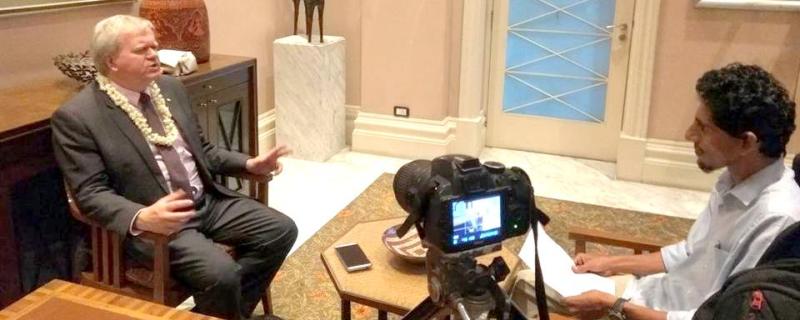
The Research Matters team caught up with Nobel Laureate Professor Brian Schmidt, Vice-Chancellor of the Australian National University, when he was in Bengaluru in June, 2017. Having won the Nobel Prize in Physics in 2011 for the discovery of the accelerating expansion of the universe through observations of distant supernovae, our team wanted to know his views about the recent discovery of gravitational waves by LIGO and the Virgo Observatory. Read on to know more about his work on type 1A supernovae and share his excitement for the future of cosmology, after the discovery of gravitational waves.

Cyanide is any chemical compound that contains a carbon atom triple bonded to a nitrogen atom, called a cyano group. Some of the cyanide compounds are known to be extremely toxic with the ability to cause death within minutes.

Asteroids bring an image of shooting stars streaking across the sky. But did you know, they were the reason behind one of the biggest mass extinction events in the history of life? Often harmless, asteroids have been striking the earth for millions of years and there are still millions out there, wandering in outer space. On the occasion of International Asteroid Day, let us learn about these incredible space rocks and why it is important to track and study them. 

Foodborne diseases, caused by Salmonella, are responsible for 1 in 10 illnesses globally. Treating Salmonella infections using traditional antibiotics is turning to be a challenge because of the development of drug resistant strains. Now, a new study at IISc has developed nanotechnology based nanocarries using silica that can deliver very small dosage of antibiotics to the affected cells, thus hitting the right target. Using laboratory experiments, the researchers found that these nanocarries performed much better than conventional antibiotics in all stages of the infection. The design of these nanocarries are generic, and can be used for delivering different antibiotics, they claim.

Malaria, a deadly mosquito borne disease, kills about half a million people around the world, every year. Developing countries face a challenge in accurately diagnosing malaria in early stages due to the need of sophisticated diagnostic devices and skill. A new study at IISc has developed a technique to test for malaria with very small quantities of blood samples using laser light. By holding a single RBC using a pair of 'optical tweezers', this technique can detect malarial parasites in the RBCs even at an early stage, say the researchers. The researchers claim this technique can help save many lives if commercialised on a larger scale. 

Search Research Matters