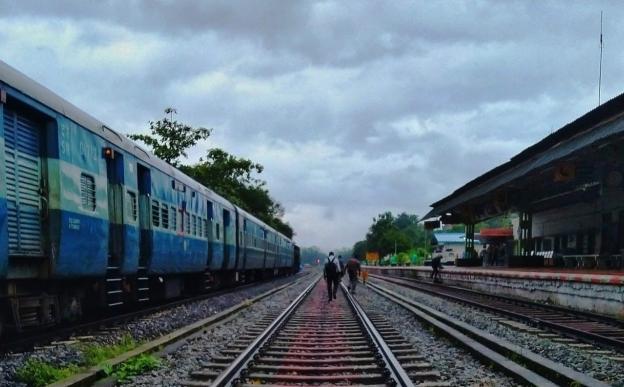
மும்பை ஐஐடி மற்றும் இந்திய ரயில்வே ஆராய்ச்சியாளர்கள், ரயில்வேயின் செயல்திறனை மேலும் அதிகரிக்க, வாரத்தின் சில நாட்களில் மட்டுமே இயக்கப்படும் ரயில்களை ஒரே குழுவாக இணைத்து, திட்டமிடலில் ஒரு புதிய மாற்றத்தைக் கொண்டுவந்துள்ளனர்

Archives

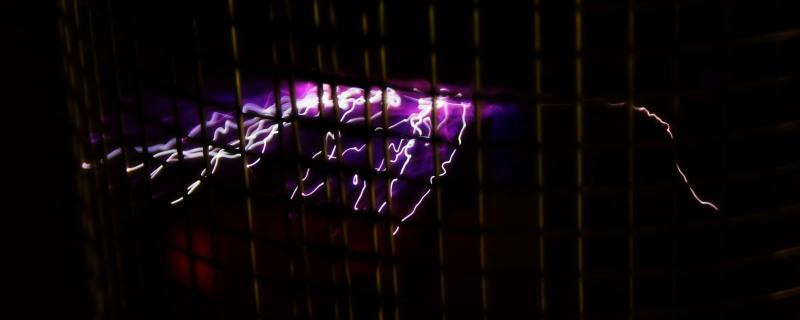
Researchers at the Indian Institute of Science, Bangalore have studied the behaviour of insulators that protect overhead power transmission conductors, in the presence of fog and mist. Polymeric insulators, which are made of various kinds of rubber, have been used in recent times because they are light weight, require lesser maintenance, and resist wetting of surface. However, they are also more sensitive to certain environmental and physical conditions. This study, led by Prof. B. Subba Reddy from the High Voltage Laboratory, Department of Electrical Engineering, has shown some light on the effect of environmental factors like fog and mist on these insulators.
An international team that included Indian researchers has analyzed the published results on Gamma rays in the immediate aftermath of the recent detection of Gravitational waves by the Laser Interferometer Gravitational-wave Observatory (LIGO) – called the GW150914 event, and has concluded that the non-detection of High Energy Neutrinos (HEN) during that event suggests an upper limit to the energy of the associated short Gamma Ray Burst (GRB).

The vivid and myriad colours of the natural world captivate our eyes and benefit life on earth. Learning how nature colours its palette advances our understanding of the world around us and hence scientists ubiquitously are trying to imitate designs inspired by nature, to fabricate better devices. Now, a collaborative study between researchers at the Jawaharlal Nehru Centre for Advanced Scientific Research (JNCASR), Bengaluru, and the Indian Institute of Science (IISc), Bengaluru, has proposed a novel technique to build better display devices that imitate naturally occurring colours.

The flourishing Complex Systems Research Programme at the National Institute of Advanced Studies (NIAS), Bangalore, headed by Prof. Janaki Balakrishnan aims to understand and explain the dynamical behaviour of complex systems of diverse kinds by constructing appropriate predictive mathematical models. The work done by Prof. Balakrishnan and her collaborators deals with a variety of disciplines and hence is highly interdisciplinary and trans-disciplinary in nature. Some of her recent works on ecological modelling and impact of climate change on ecological population dynamics have met with considerable success.

Quantum computers are designed to handle information using the strange but powerful laws of quantum physics. Scientists predict that these computers will be faster and consume lesser energy than conventional computers.

If someone came up to you and said the stool from one person can be used as medicine to treat another, you’d most likely be disgusted or find it absurd. It sounds incredible, but it is true.

Black holes are the celestial objects with such immense gravity that nothing can escape from them -- not even light!

Researchers have always used bacteria, yeast, worms, fruitflies, fish and rodents in laboratories since experimentation on humans is often unfeasible and presents with an ethical conundrum. These model organisms are chosen depending on the nature and complexity of study and the cost and convenience of its maintenance. Zebrafish (Danio rerio) is today a favourite model organism for various biological research studies for well deserved reasons.

It is thought that free radicals are the cause of aging and can also cause or aggravate diseases like cancer and coronary heart disease. However, this is a highly debated topic and experiments have been conducted to show that this may not be true.

“Oh! Not again! Bees are buzzing all around the tube light. Now it's enough, I have to call the pest control guy and get rid of this hive ASAP!”. Before doing this, stop and imagine, how will the world be without honey bees?

Search Research Matters