Climate Change

Kanpur

Researchers from IIT Kanpur, Pacific Northwest National Laboratory, USA, University of Hyderabad, and IIT Delhi have tried to understand how aerosols affect the Indian monsoon season.
Bengaluru

Scientists from the Indian Institute of Science, Bangalore, study how climate change is affecting small herbivores in the Himalayas. 

Bhubaneswar

An international team of scientists study how temperature over India has changed over the span of 7 decades and point of the role of geography in changing temperatures.

Bengaluru

Researchers from the Ashoka Trust for Research in Ecology and the Environment (ATREE), have analysed how climate change could affect the habitats of the Nilgiri Tahr in the years to come.

Bengaluru

Higher altitudes have lower levels of oxygen, and hence animals living at such altitudes have to adapt. Having higher content of haemoglobin is one adaptation strategy used. In a recent study, scientists from the Indian Institute of Science, Bangalore, explore how blood parasite affect these high altitude birds.

Bengaluru

Erik Solenheim, Executive Director of the United Nations Environment Programme visited Center for Ecological Sciences at Indian Institute of Science (IISc), Bengaluru to deliver a talk about the interface of science and policy.

In his talk titled ‘Science Policy Interface: Insights and ideas for a changing world’ Mr. Solenheim spoke about the three main environmental challenges of we face today namely; climate change, pollution and loss of biodiversity.

Bengaluru

Scientists from the Indian Institute of Science, Bangalore, in a rare study combining biology and paleontology show how different climatic factors over evolutionary time have affected the evolution of fan throated lizards.

Pune

What a year it has been for Indian science! From indigenous transistors to help India's Internet of things to solutions to living in harmony with wild animals we have seen it all. Here we take a look at the highlighs of Indian research in 2017.

Bengaluru

Thickness of ice is one of the key indicators of global warming, but it is difficult to take these measurements accurately as direct methods can not be used on a large scale. An international team of scientists make an effort to standardise these measurements and evaluate the various current models.

Mumbai

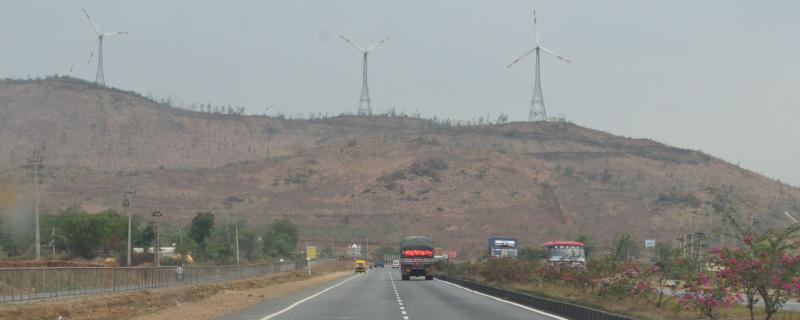
In an attempt to reduce their carbon footprint, many nations around the world are looking at wind energy. This form of energy is already responsible for 12% of installed power in India. An Indian Institute of Technology Bombay study predicts Indian offshore wind farms will benefit from rise in sea temperatures

Search Research Matters