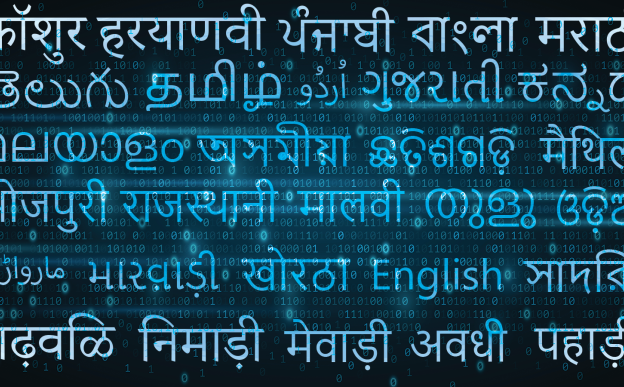
ఐఐటీ బాంబే, ఐఐటీ మద్రాస్ మరియు ఐఐఐటి హైదరాబాద్ పరిశోధకులు కలిసి ఆంగ్లం నుండి అనేక భారతీయ భాషలకు స్పీచ్-టు-స్పీచ్  యాంత్రిక అనువాదం (SSMT) వ్యవస్థను రూపొందించారు.

Archives

A team of scientists from the Indian Institute of Science, Bangalore have recently demonstrated the self assembly of a 2-D array of high aspect ratio, electrically conductive sharp tips fabricated on a soft, stretchable and bendable material by using capillary forces. The patented technology was developed by Ganapathy Saravanavel, Karthik Raghunandan and Prof. Sanjiv Sambandan at the Department of Instrumentation and Applied Physics at IISc.
A collaborative study conducted by researchers at the Department of Molecular Reproduction, Development and Genetics, Indian Institute of Science (IISc) and the National Institute of Mental Health and Neuro Sciences (NIMHANS), Bangalore, has analyzed DNA samples of Indian families to study brain diseases. Headed by Dr. Arun Kumar from IISc and Dr. P. S. Bindu from NIMHANS, it is the first report on the genetic analysis of 22 Indian families with neurodegenerative diseases caused by alterations in a specific gene called PLA26G.

In December 2015, Chennai witnessed massive floods killing about 400 people and displacing thousands.

The eyes and the hands work together as a team for most of the daily tasks we perform. When we pick up the morning coffee, or when we drive to work, our brains are constantly commandeering our eye and hand systems to bring about smooth, coordinated movements. We often do not consciously compute the steps required to bring them about. However, when the coordination is disrupted, even the simplest of tasks like picking up a book prove to be extremely challenging. How does the brain achieve efficient eye-hand coordination? A recent study from Prof. Aditya Murthy’s laboratory at the Indian Institute of Science, Bangalore, explores this critical question and suggests a framework to understand the control mechanisms of coordinated eye-hand movements.

Certain pathogenic bacteria have adopted a unique ‘style’ of killing its victim by boring nanoscale holes into its cellular membrane. The pore-forming toxins (PFTs) released by these bacteria rapidly puncture the target cell membrane, and the cell leaks to death in a process known as apoptosis. Scientists across the globe have been actively working on designing various nanoscale (1-100 nanometers) blockers to plug these pores and prevent cell damage. Recently, a group of scientists from the Indian Institute of Science, Bangalore, have suggested an effective nanoscale blocker made up of Polyamido-amine (PAMAM) dendrimers, a synthetic polymer.

People had never thought that Gastritis in the stomach was caused by a bacterium, never believed it could be, so much so that one of the two scientists Barry Marshall and Robin Warren had to drink a cupful of Helicobacter pylori culture to show that he developed gastritis! They were later awarded a noble prize for their discovery of the bacterium Helicobacter pylori and its role in gastritis and peptic ulcer.

The first land animals to communicate using sound were, in all probability, insects. Insect acoustics is an exciting field of study that addresses questions such as how insects use their sounds to communicate, how different are the 'languages' or the 'words' that various insects use and how acoustic signals are interpreted by them.

Detecting ammonia is important in many industrial and biomedical applications. A team of researchers from the Indian Institute of Science, Bangalore have synthesized ammonia sensors from filter coffee, the favourite beverage of the city.
Hari Krishna Sadhanala, Ravi Nandan, and Prof. Karuna Kar Nanda from Materials Research Centre, IISc, have reported the synthesis of nanoparticles using filter coffee powder as the starting material. Nanoparticles have a very large surface area for a given volume to capture on their surface, gases in the vicinity. They can be deposited on a substrate like glass, plastic or paper to make the sensors.

When India’s emerging market bubble had burst by 2014, the government launched the “Make in India” initiative to resuscitate the micro, small and medium enterprises (MSMEs) and popularize entrepreneurship. The initiative would provide skills and create jobs for the workforce while looking to make India a manufacturing hub with modern laws and policies that aid investors and entrepreneurs. In India, MSMEs are the second largest employer and about 12 million people are expected to join the workforce in the next three years. However, this sector is facing a lot of challenges like technological obsolescence, supply chain inefficiencies, increasing fund shortages among others. Now, a new study by the Department of Management Studies at the Indian Institute of Science, Bangalore, has provided some interesting aspects of performance of MSMEs. “Our work studies the role of strategic marketing and innovation to improve the performance of MSMEs and its contribution to the economic development of the country as a whole”, says Mr. Lohith C.P., one of the research team members.

Tumors are often linked to cancer when they become malignant and start to spread. Doctors and researchers throughout the world are continuously seeking better ways to diagnose and treat tumors early on, thus preventing severe damage. In a rare interdisciplinary study, engineers from the Indian Institute of Science, Bangalore, have stepped up to help doctors in treating tumors. Prof. Radhakant Padhi from the Department of Aerospace Engineering and his team has designed an automation tool for slow and controlled drug release. It is an intelligent feedback algorithm that can be embedded in a micro-controller and effective in treating solid tumors with minimal side effects.

Search Research Matters