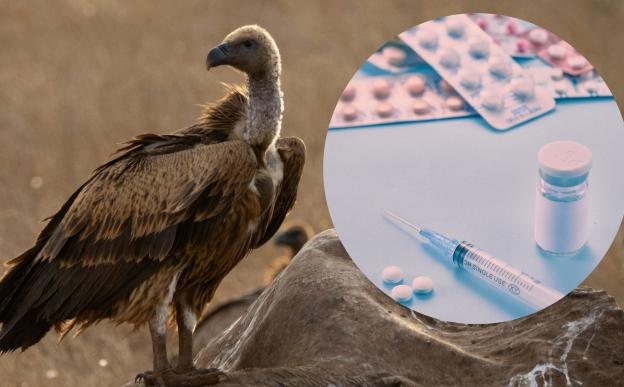
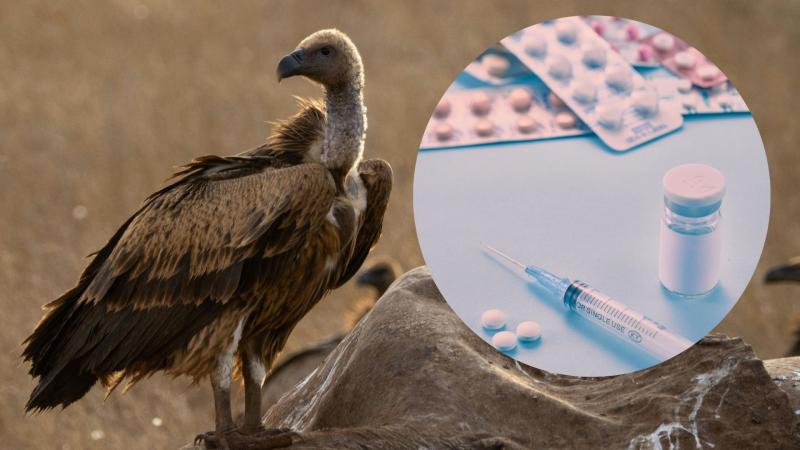
In one of the most extensive wildlife conservation investigations of its kind, a team of researchers used undercover surveillance to expose a deadly pharmaceutical threat to the survival of South Asia’s vultures. For nearly two decades, conservationists have known that the veterinary drug diclofenac was responsible for wiping out millions of vultures across India, Nepal, Pakistan, and Bangladesh. Its widespread use pushed vulture populations, like those of the white-rumped vulture (Gyps bengalensis), the Indian vulture (Gyps indicus) and the slender-billed vulture (Gyps tenuirostris) to the brink of extinction.
Earlier, in 2006, the Government of India had imposed a ban on the use of Diclofenac for veterinary use. More recently, in 2015, the Ministry of Health and Family Welfare also banned the sale of multidose vials of Diclofenac for human use, which was found to be misused for veterinary purposes. While bans on this drug have been successful for vulture conservation, particularly in Nepal, a new study shows that the danger has not passed; it has simply been replaced. The research identifies a surge in the availability of other non-steroidal anti-inflammatory drugs (NSAIDs) that are just as lethal to these giant scavengers.
Did You Know? Since the 1990s, the population of vultures has crashed, with some species like the Gyps bengalensis declining by over 99% in just over a decade, which is the fastest decline of any bird species in recorded history. |
Between 2012 and 2024, researchers from the Royal Society for the Protection of Birds (RSPB), the Bombay Natural History Society, and other regional partners conducted thousands of covert surveys at pharmacies across India, Nepal, Pakistan, and Bangladesh. To get an honest picture of what drugs were being sold to farmers, the surveyors posed as local livestock owners with a simple, relatable problem: a sick or injured cow. In India and Nepal, the undercover surveyors would ask pharmacists for a painkiller for their animal, recording the first drug offered to them. In Pakistan and Bangladesh, the team asked for all available stock to be shown to them. This covert methodology was necessary because, in many areas, selling diclofenac for veterinary use is illegal.
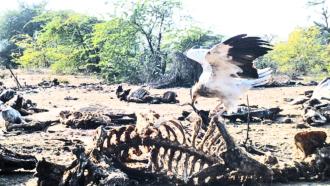
When livestock, like a cow, is treated with NSAIDs like diclofenac, nimesulide, or flunixin and subsequently dies, the drug remains in its tissues. Vultures, which feed exclusively on carrion or flesh from dead animals, eat this infected carcass. Earlier studies have shown that these drugs cause visceral gout in birds, a painful condition in which the kidneys fail to filter uric acid from the blood. This leads to the formation of crystals on the bird's internal organs, killing it within days. The research emphasises that even a small number of contaminated carcasses can cause a population crash, making the prevalence of these drugs in pharmacies a critical metric for vulture survival.
The findings of the study offer a mix of hope and alarm. On the positive side, the data show that conservation advocacy works. In Nepal, which declared itself "diclofenac-free" in 2023, the toxic drug has virtually disappeared from shelves, replaced by meloxicam, a drug proven to be safe for vultures. Similarly, in Indian Vulture Safe Zones (VSZ), where education campaigns have been intense, diclofenac availability has dropped to near zero.
However, the study also found what they termed a” hydra” problem, where cutting off one toxic drug gave rise to others. In Bangladesh, the researchers documented a rapid and worrying rise in flunixin, a drug known to be toxic to vultures. Furthermore, in Indian states like Uttar Pradesh and Madhya Pradesh, the drug nimesulide is becoming increasingly common. Perhaps most insidious is the drug aceclofenac. The researchers explain that aceclofenac acts as a pro-drug, meaning that once it enters a cow’s body, it metabolises and chemically transforms into the banned diclofenac, killing vultures just the same.
This research provides the first comprehensive look at how the pharmaceutical market has reacted to government bans over the last decade. Vultures provide a critical ecosystem service that protects human health. By stripping carcasses clean within hours, they prevent the proliferation of feral dogs and the spread of deadly diseases like rabies and anthrax. The decline of vultures has previously been linked to increased healthcare costs in India due to rising disease rates.
This study serves as a warning bell for policymakers. It argues that banning a single drug is insufficient if toxic alternatives are readily available. The authors conclude that safety testing in vultures must be mandatory before any new veterinary NSAID is licensed. Without such systemic changes, the recovery of these majestic birds remains fragile, proving that the battle to save nature’s most efficient cleanup crew is far from over.
This article was written with the help of AI and edited by an editor at Research Matters.