
Trees hold a special place on the planet. Apart from being an important resource to us, they are also a generous host to many species of fungi and bacteria that spend parts of their life cycle inside the trees. These microorganisms, called endophytes, have a symbiotic relationship with trees, the nature of which depends on the genetic, environmental and geographical conditions. In a recent study, researchers at the Vivekananda Institute of Tropical Mycology (VINSTROM), Chennai, have surveyed about 100 trees from the forests in the Western Ghats to explore a particular endophyte species, Pestalotiopsis, and its interaction with trees within the Nilgiri Biosphere Reserve.
Archives
Paper, considered a symbol of knowledge, has been used indiscriminately in the past century causing severe environmental degradation. One study estimates that with all the paper we waste each year, we can build two 12-foot high wall of paper from New Delhi to Bangalore! Electronic storage is not a better alternative since it poses another challenge of handling e-waste that is generated. Now, a collaborative study by researchers headed by Prof. Sandeep Kumar and Dr. A.R Yuvaraj at Raman Research Institute (RRI), Bangalore, and the University of Malaysia, has developed a novel technology that could reduce the use of paper and the generation of e-waste by replacing the way we present information. The researchers have developed an optical storage device made of gold nanoparticles decorated with compounds called azobenzenes.
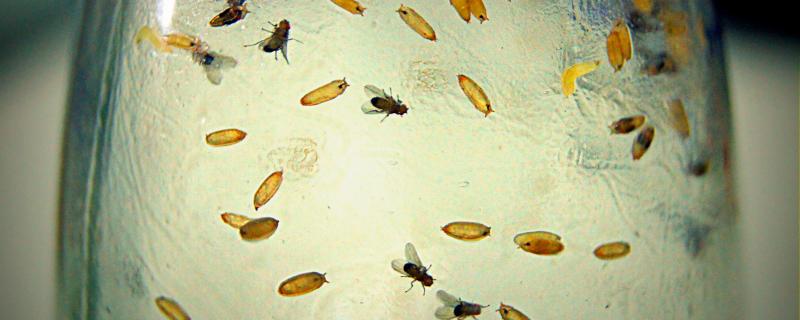
Evolutionary changes are manifested in natural populations over many generations, which makes it difficult to observe evolution in real-time. Nevertheless, there are many evolutionary biologists who are keen to understand the intricacies of this process and Prof. N G Prasad from the Indian Institute of Science Education and Research (IISER), Mohali is one of them. Recently, Prof. Prasad and his colleagues published a study based on how fruit flies respond to crowding during larval stages of development.

Recruitment process is a time-consuming affair and a lot of research is underway in automating some of the aspects of this process. Computer-based tests that evaluate an individual’s knowledge are rampant. But can such tests be developed to measure the communication skills of a candidate, in place of a face-to-face interview? Prof. Dinesh Jayagopi and his team of researchers at the International Institute of Information Technology (IIIT), Bengaluru, have now identified features and attributes that help in predicting the communication skills of candidates. Using Machine Learning, they have developed a prediction algorithm that can evaluate the communication skills of an individual. “The goal of the study is to put a candidate in both manual and automated test settings and compare their behavior and behavior perception across the two scenarios”, explains Prof. Jayagopi.
In an effort to make water resources sustainable, the Ministry of Earth Sciences, India and the Natural Environment Research Council (NERC), UK have funded a new project “Upscaling Catchment Processes for Sustainable Water Management in Peninsular India” (UPSCAPE). It is a 3-year £2 million research project that is one of the three projects in India initiated under the ambitious Newton-Bhabha Sustaining Water Resources Programme. Six institutes have come together as partners in this project, of which the prestigious Indian Institute of Science, Bangalore, is the lead Institute from India. “The motivating factor of the Newton-Bhabha project is to ensure science reaches the society and benefits it”, says Prof. Pradeep Mujumdar, Chairman at the Interdisciplinary Centre for Water Research, Indian Institute of Science. He also leads the team of Indian scientists working on the UPSCAPE project in the Cauvery river basin.
Ferroelectric materials carry a spontaneously polarized charge within their crystalline structure that can be reversed by the application of an electric field. As scientists try to shrink them to nanometre sizes, these materials often lose their polarization. Now, a collaborative research team from India and Germany has observed an unexpected effect in the ferroelectric alloy of bismuth ferrite and lead titanate (BiFeO3-PbTiO3). They have found that mechanically grinding this material to smaller sizes actually leads to a different atomic arrangement - a new structural phase that retains the polarization with slight alteration. This discovery opens up interesting possibilities for using this ferroelectric material in a variety of miniaturised devices - computer memory, RFIDs, sensors and actuators.
Nanotechonology, the field of science that manipulates objects at atomic or molecular level, is tout to be the science of the future. Researchers across the globe are working rigorously to tapthe potential this possesses. In a recent multinational collaborative study, researchers from the Indian Institute of Science(IISc), Bangalore, the Heriot-Watt University, Edinburgh, UK, and the Georg-August-Universität, Göttingen, Germany, have tried exploring the biomedical applicability of zinc oxide (ZnO) nanostructures. The results of this study have opened up novel possibilities in nanoscience research, especially pertaining to the field of biomedicine.

The traditional Asian chewing package used in marriages for symbolising heavenly love, is no longer having its heavenly charm according to a new research. Areca nut, packed with betel leaves and slaked lime, is an important chewing dessert in many Asian cultures. Its usage to cure indigestion and impotence dates back to first century AD and it is still being consumed by around 700 million people in the tropics for its psychoactive and brain stimulating properties. However, studies have indicated that several chemical compounds present in areca nut are carcinogens and its usage has been linked to oral cancers. Now a new study points at a detailed pathway on how chewing areca nut causes a precancerous condition.

Solar power has the potential to reverse the environmental challenges faced by the world today. With solar panels becoming economically viable and efficient by the day, solar energy may soon become the prime source of electricity. However, there are a few challenges faced in the process of electricity production through solar energy. In a recent study, researchers at the Indian Institute of Science, Bangalore, have addressed one such challenge while converting the Direct Current (DC) output of solar panels into Alternating Current (AC) required to run our appliances. Dr. Abhijit Kulkarni and Prof. Vinod John from the Department of Electrical Engineering have developed a new start-up method for a compact and efficient photovoltaic inverter that works with solar panels to convert DC to AC.

Nano-size polymers have made headlines in the recent years for their biological and medical applications. With dimensions of less than 100 nanometers (nm), they can carry drugs and pharmaceuticals in the body due to their subcellular size, sustained release properties and biocompatibility with our tissues and cells. But how are these nano-size polymers synthesized? In a recently written book chapter in the book, ‘Nano-size polymers: preparation, properties, application’, Prof. Manas Chanda, a retired faculty from the Indian Institute of Science, Bangalore and an expert in the field of polymers, has enunciated the direct synthesis of these tiny polymers by a method called microemulsion polymerization.