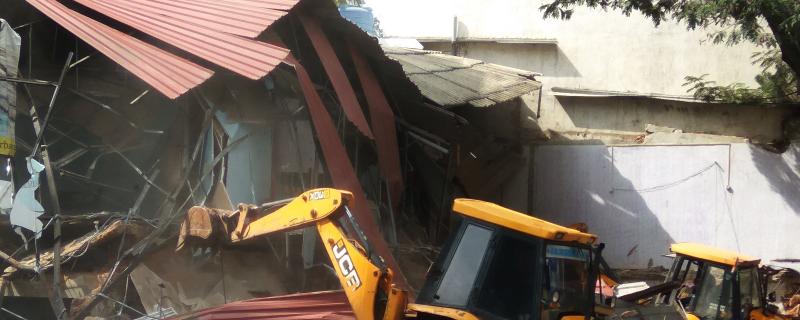
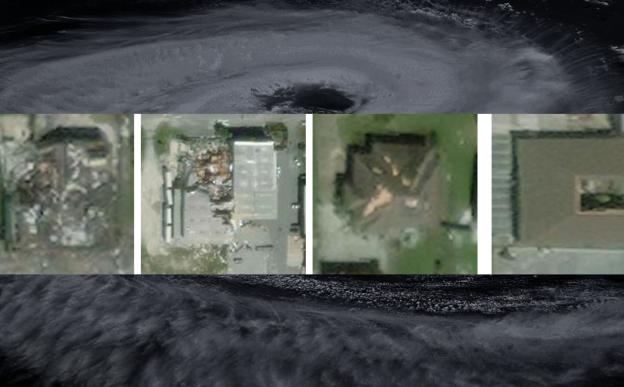
आयआयटी मुंबईद्वारे विकसित नवीन डीप-लर्निंग फ्रेमवर्क SpADANet (स्पाडानेट) मर्यादित लेबल्स वापरूनही अनेक चक्रीवादळांमधील संरचनात्मक नुकसान अधिक अचूकपणे वर्गीकृत करू शकते.

Archives

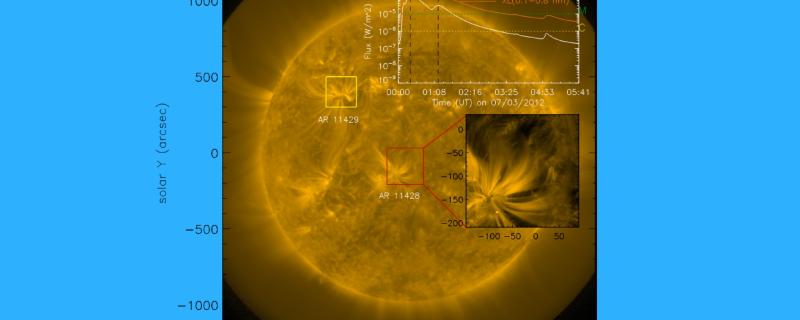
The Sun gives the light and heat that sustains all life on earth. But many mysteries still surround the star and new discoveries are being made every day. On March 6th, 2012 one such event was observed with our telescopes - a standing wave was observed in one of the coronal structures on the solar surface. Find out why the event was important to our understanding of the Sun in this article.  
Medical advancements and modern scientific techniques strive to solve challenges posed to human communities, especially healthcare threats. Viruses are one of the major threats and tend to make themselves resistant to drugs and evolve new mechanisms for survival by making subtle changes in their DNA called as mutations.

Human beings, in their brief history, started off as hunter–gatherers hunting animals and birds, or collecting fruits and nuts to eat. They then invented agriculture, a revolutionary transformation from ‘collecting’ food to ‘growing’ it. Suddenly, acquiring food, which was one of the most important task of the early man, became a breeze.

The human body has a mechanism to maintain a certain balanced pH (potential of Hydrogen), or the degree of acidity or alkalinity in the body. Generally, this is found to be around 7.35 (on a scale of 0-14), and it varies throughout the day, depending on one’s diet and activities. The pH levels in tissues are far more sensitive.

The Earth’s interior is still a mystery to us. While we have sent missions to probe the outer reaches of our Solar system, the deepest boreholes on Earth go down to only a few kilometres. The only way to learn what’s going on deep inside our planet, in the core and the mantle, is by indirect methods.

The Indian subcontinent is prone to a large number of natural disasters. The 58% of the landmass is prone to earthquakes and 12 % to floods. 68% of country’s agricultural land is prone to droughts. Apart from these, bad policy making and unplanned development has also contributed to man-made disasters in the country. On the occasion of International Day for Disaster Reduction, learn about the the measures the country has already taken and what more can be done, to reduce the devastation caused by disasters.  

In July this year, the Moderate Resolution Imaging Spectroradiometer on NASA’s Aqua satellite photographed a major chunk of glacial ice shelf (5,800 sq. km) breaking off from one of Antarctica’s floating ice platforms, called Larsen C, shrinking its size by at least 10 percent.

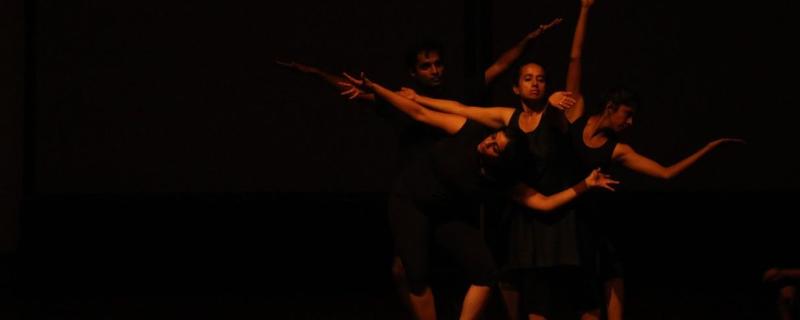
As a part of the Student Conference on Conservation Science held on the 23rd of September in Bangalore, Artecology presented a unique combination of performing arts and science. Titled "How to be a Fig", this movement art presentation was a hit among the attendees that included ecologist, conservationists, artists and dancers. How exactly was the performance? Read on to know.

Search Research Matters