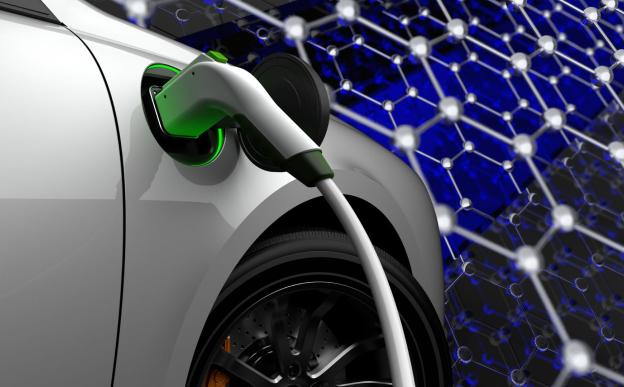
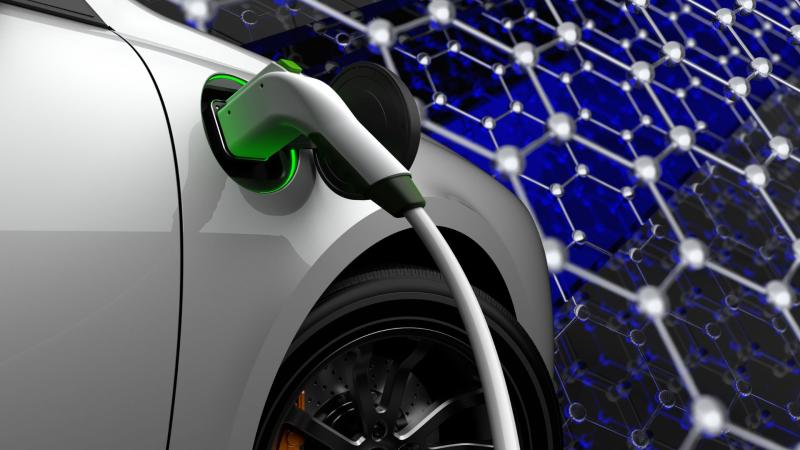
Researchers at the Manipal Institute of Technology in Manipal have demonstrated a potential breakthrough in electric vehicle technology that could enable cars to charge significantly faster and weigh much less than today’s models. By using computer simulations to model the performance of graphene-enhanced batteries, the team showed that this wonder material could outperform the standard lithium-ion batteries currently found in millions of electric vehicles (EVs) worldwide. The study suggests that integrating graphene into battery systems could reduce charging times by 22% to 27% and cut the total weight of a typical battery pack by a staggering 53%. These findings address the three most significant pain points for current EV owners: long wait times at charging stations, limited range due to heavy battery packs, and the risk of batteries overheating.
The research team conducted their investigation using a MATLAB-based simulation framework. They modelled an entire battery system based on the real-world specifications of the Tata Nexon EV Prime, a popular electric SUV. This allowed the researchers to see how a graphene battery would behave in a real car under various driving conditions. By comparing the graphene-enhanced model against a traditional lithium-ion setup, they were able to quantify precisely how much better the new technology could be. The results show that while a standard battery pack might weigh around 260 kilograms, a graphene version with the same energy capacity would weigh only about 121.5 kilograms. This massive weight reduction is significant for the automotive industry, as lighter cars require less energy to move, thereby increasing the distance a vehicle can travel on a single charge.
Did You Know? Graphene was first isolated in 2004 by two scientists who used ordinary sticky tape to peel layers off a piece of graphite (the stuff in your pencil lead) until only a single layer of atoms remained. |
Graphene is a single layer of carbon atoms arranged in a hexagonal lattice, resembling a microscopic honeycomb. Despite being only one atom thick, it is incredibly strong and possesses extraordinary electrical and thermal conductivity. In a traditional lithium-ion battery, ions move between a cathode and an anode through a liquid electrolyte. However, this process can be slow and generates significant heat. Graphene acts like a high-speed highway for electrons and ions. Because it can move electricity so efficiently, the battery can be charged at much higher speeds without the internal resistance that usually slows things down. Furthermore, graphene’s ability to conduct heat means it can pull warmth away from the battery’s core much faster than traditional materials, keeping the system at a safer, more stable temperature.
Thermal management is one of the most critical aspects of battery safety, as overheating can lead to a dangerous phenomenon known as thermal runaway, which is the primary cause of battery fires. The researchers found that the graphene-enhanced system maintained much lower operating temperatures across all tested discharge rates. At high speeds or under heavy loads, the graphene battery was between 0.1 and 5 degrees Celsius cooler than its lithium-ion counterpart. While a few degrees might seem small, in the world of high-voltage electronics, this represents a 15% reduction in heat buildup at peak usage. This improved cooling not only makes the vehicle safer but also extends the battery's overall lifespan, as heat is the main factor that causes batteries to degrade over time. The researchers also specifically modelled a graphene-optimised Battery Management System to ensure the simulation reflected real-world operation.
However, the researchers are careful to note that significant limitations remain to be overcome before graphene batteries become standard in every driveway. The most significant hurdle is production costs. Currently, producing high-quality graphene is an expensive and complex process, with prices ranging from tens to thousands of dollars per kilogram, compared to just fifteen dollars for the activated carbon used in many current batteries. There are also technical challenges, such as first-cycle loss, in which graphene-based materials can lose a significant portion of their energy capacity during the very first charge. Additionally, mass-producing graphene at the scale required for the global automotive industry remains a massive industrial challenge that has yet to be solved.
Despite these obstacles, the societal benefits could be immense. As the world shifts toward carbon neutrality to combat climate change, the transportation sector must move away from fossil fuels. Currently, range anxiety, the fear that an EV will run out of power before reaching a charger, and the long duration of charging stops are the most significant barriers preventing people from switching to electric cars. By demonstrating that graphene can make batteries lighter and charge faster, this research provides a roadmap for making EVs more practical and appealing to the general public. As manufacturing techniques improve and costs fall, the integration of graphene could finally make the electric vehicle experience as seamless and convenient as filling up a petrol tank, helping the world transition to a cleaner, cooler, and faster future.
This article was written with the help of AI and edited by an editor at Research Matters.