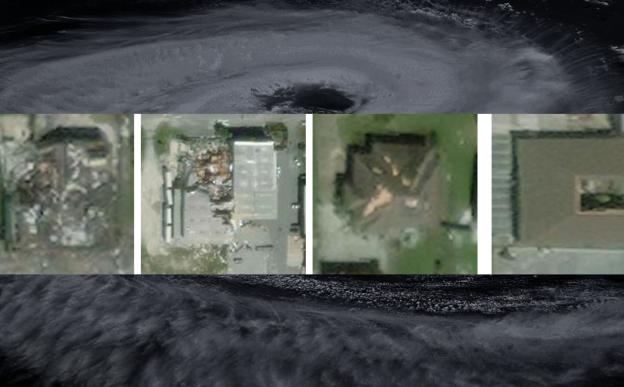
आयआयटी मुंबईद्वारे विकसित नवीन डीप-लर्निंग फ्रेमवर्क SpADANet (स्पाडानेट) मर्यादित लेबल्स वापरूनही अनेक चक्रीवादळांमधील संरचनात्मक नुकसान अधिक अचूकपणे वर्गीकृत करू शकते.

Archives

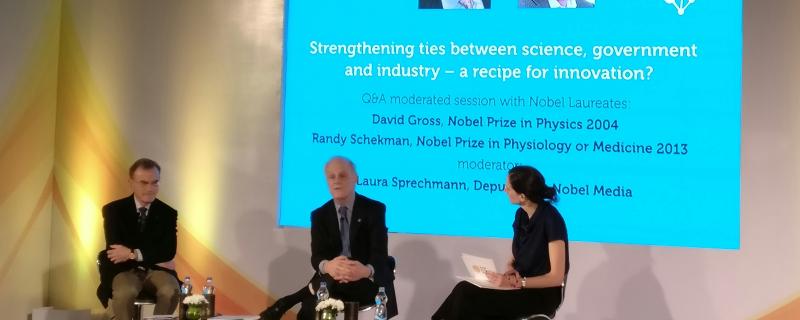
The Nobel Prize Series India 2017, in the last leg of its program, witnessed Nobel Laureates Prof. David Gross and Prof. Randy Schekman actively engage in a Q&A session at ITC Gardenia this morning. After attending the grand inauguration of the Nobel Exhibition by the Hon’ble Prime Minister Narendra Modi, at Science City, Ahmedabad on 9th January, the visiting laureates engaged in the Nobel Dialogue, held as a part of Vibrant Gujarat Summit at Mahatma Mandir in Gandhinagar.
Ribosomes are molecular machines that make proteins in cells. That the ribosomes are important can be judged by the fact that the cells spend about 40% of their energy in assembling them. In bacteria, ribosomes are made up of a large (50S) and a small (30S) subunits. Flaws in the assembly and maturation (biogenesis) of any of these subunits affect protein synthesis in various ways and often result in the organism’s intolerance to cold, and impact their resistance to drugs and pathogenity. In higher organisms (including humans), defective biogenesis of ribosomes could lead to various diseases. Hence, an understanding of how cells manage accuracy in the complex process of ribosome biogenesis is of utmost importance in developing therapeutic interventions. Now, a study from the laboratory of Prof. Umesh Varshney at the Department of Microbiology and Cell Biology, Indian Institute of Science (IISc), Bangalore, has unravelled the mechanism behind synthesis of ribosomes.

Science has established that the father’s sperm, which fertilizes the mother’s ovum resulting in the formation of an embryo, decides the sex of an individual. So it’s only logical that if the ‘male factor’ of the sperm/ovum relationship is damaged, the product will be too. Now, a recent collaborative study by a team of researchers led by Prof. Hanudatta Atreya of the Indian Institute of Science, Bangalore, and Prof. Satish Kumar Adiga of Kasturba Medical College, Manipal, has found that if the sperm, set to fertilize a particular ovum, has damaged DNA, it affects the metabolism of the embryo that it fathers. The study was conducted using samples of sperm and ova from couples undergoing Intra-Cytoplamic Sperm Injection (ICSI), a popular technique to help infertile couples conceive.

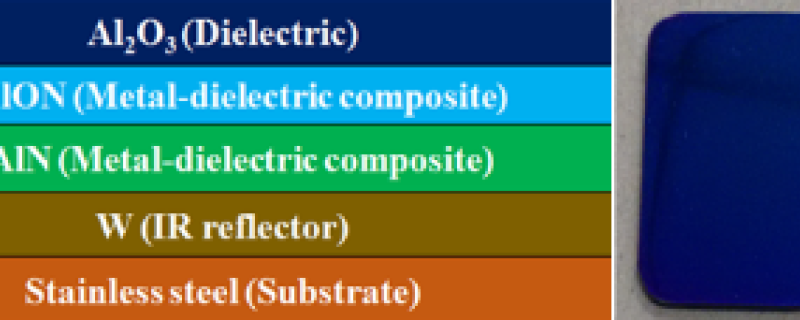
Black coloured rooftops have become the norm of many of the cities’ landscape with increasing number of houses switching over to sustainable, efficient and clean energy source – solar energy. Solar-thermal power systems that convert solar energy to heat or electricity are becoming ubiquitous. These systems typically consist of a flat plate collector that utilizes solar absorber coatings to get maximum conversion efficiency from incident solar radiation to heat. These collectors are coated black to enhance the absorptance- the effectiveness of absorbing radiant energy. Now, a group of researchers, led by Prof. Bikramjit Basu from the Material Research Centre at the Indian Institute of Science, Bangalore, and Dr. Harish C Barshilia from CSIR-National Aerospace Laboratories, has developed a new, colourful coating for flat plate collectors, thereby increasing its absorptance without compromising the aesthetic appearance of the roofs where they are installed.

The Internet is a bottomless mine of information in various forms – text, videos and images. Organizing this information for easy search and retrieval is very beneficial to internet users, and poses challenges to computer scientists. While lot of research progress has been made about categorizing textual data, the same cannot be said about images and videos. A group of researchers at the Indian Institute of Science, Bangalore, has been attempting to make video search on the Internet user-friendly. In a recent paper, Prof. Chiranjib Bhattacharyya and a Ph.D. scholar Dr. Adway Mitra, at the Department of Computer Science and Automation (CSA), and Prof. Soma Biswas from the Department of Electrical Engineering, have presented techniques to this end.

Clustering is a method of grouping a set of objects or data points according to similarity, and then extracting information from this data set to a logical structure. The researchers employed various statistical tools to group 36 GCMs from Coupled Model Intercomparison Project Phase 5 (CMIP5) database with reference to maximum temperature (MAXT), minimum temperature (MINT) and the combination of maximum and minimum temperature (COMBT) in India. CMIP5 aims to provide a framework for how to conduct coordinated climate change experiments during the next five years. Assessment of these temperature related variables is essential because they are instrumental in managing the hydrological cycle.

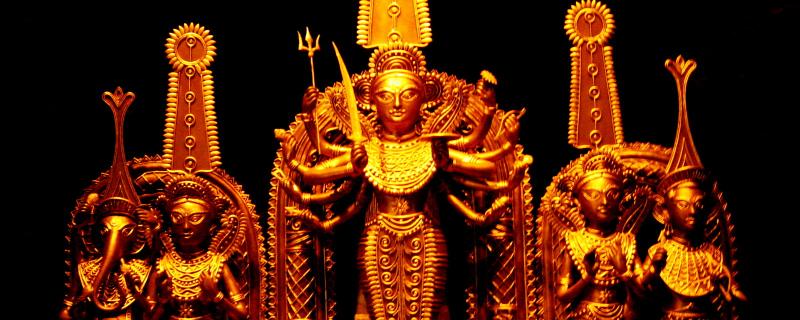
Art and artifacts from yesteryears is of great help to historians and archaeologists to string together stories about the past. They give insights into the culture, religion, politics and other aspects of the society that produced them.

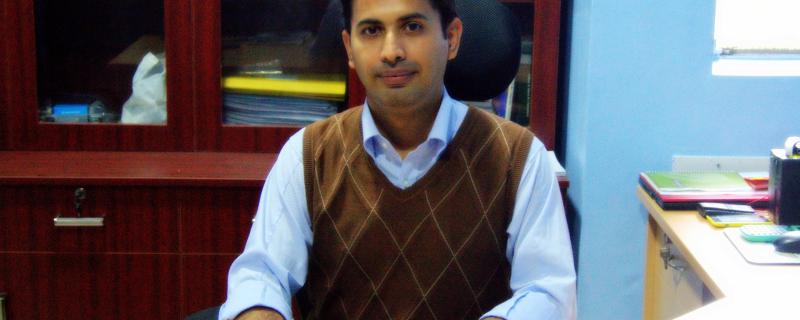
Not many young professors are as driven as Professor Prabeer Barpanda who has been donned with an unbelievable streak of academic awards. A professor at the Materials Research Centre, Indian Institute of Science, Bangalore, Prof. Barpanda is the winner of the Indian National Science Academy Young Scientist Award, 2016. He became the first Indian to receive the Energy Technology Division Supramaniam Srinivasan Young Investigator Award – an annual award given by the Electrochemical Society (ECS), USA, for 2016. In addition, he is also the first Indian to receive the American Ceramics Society’s Ross Coffin Purdy Award, 2016 awarded in October.

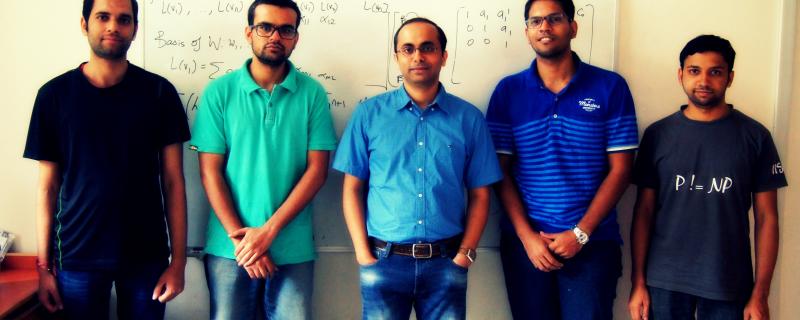
Chandan Saha of the Computer Science and Automation department, Indian Institute of Science (IISc), Bengaluru is the winner of two prestigious national awards – the Indian National Science Academy (INSA) Young Scientist Award, 2016, and the Indian National Academy of Engineering (INAE) Young Engineer Award, 2016. He works in the areas of complexity theory and algorithms, and his lab is currently trying to study arithmetic circuits to understand computational efficiency as a function of time and computational memory.

Dropped your mobile phone? You may soon stop worrying about it, thanks to the newly discovered phenomena related to carbon nanotube foam used as a shock-absorbent material in mobile phones. As a material scientist, Prof. Praveen Kumar’s work on studying the mechanical behaviour of materials has earned him various awards, the most recent ones being the Indian National Science Academy Young Scientist Award, 2016, National Academy of Science, India -Young Scientist Platinum Jubilee awards - 2016 and Associate of Indian Academy of Science. In his Thermo-Electro-Mechanical Behaviour Lab at the Department of Materials Engineering, Indian Institute of Science, Prof. Kumar and his students study the effects of size and electric fields on mechanical properties of materials and materials processing.

Search Research Matters